All the top Premier League clubs in football have access to the same thing: money, scouts, data, and a transfer window that opens for everyone at the same time. Yet the results are wildly different.
Look at how much four of England’s biggest clubs spent over the last decade to buy players, against how many major trophies they actually won.
Same market. Same resources. The difference wasn’t the size of the wallet but it was knowing who to buy, and when.

Manchester City and Liverpool turned money into trophies. Manchester United outspent everyone in the league and won the least. The budget was never the edge but using it wisely was.
Now hold that thought, because something similar is happening in investing right now.
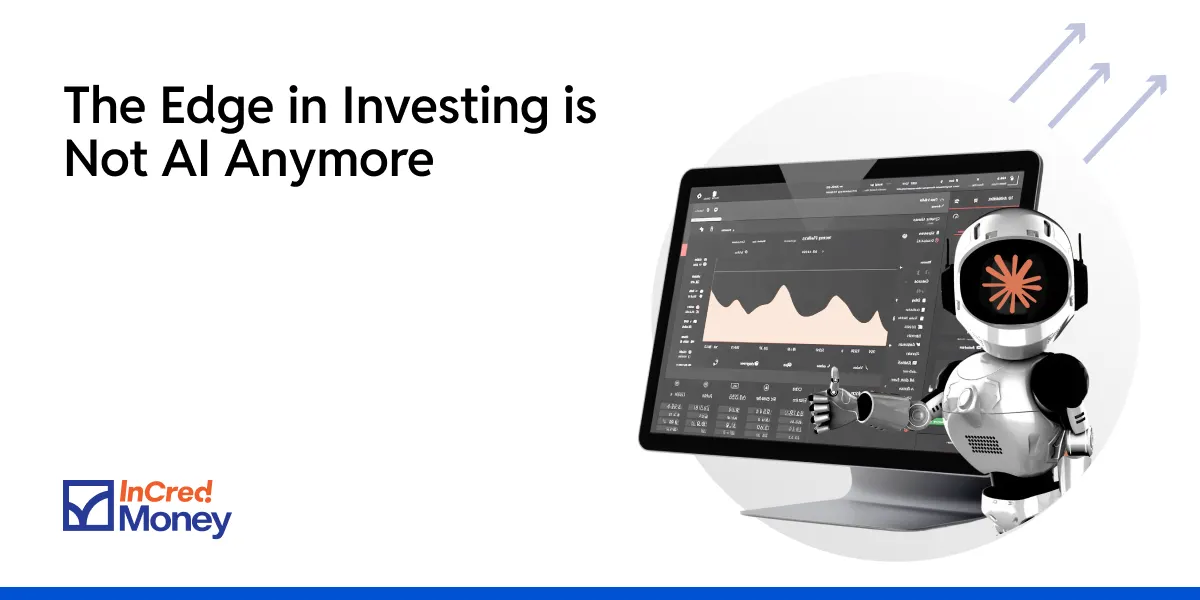
AI Just Handed Everyone a Research Analyst
A few years ago, reading an annual report, pulling out the numbers that mattered, and comparing a company to its peers took hours. Today you can ask an AI tool and get a clean summary in seconds.
That’s a real shift, and a good one. The grunt work of investing, the reading, the sorting, the number-crunching, has become cheap and fast for everyone. A first-time investor today can do in an evening what used to take a junior analyst a week.
So here’s a question for you: if everyone can now analyse a company in minutes, does everyone become a good investor?
The tool got faster for everyone. That doesn’t mean the decisions got better for everyone.
This is where the football table comes back. Every club had money. Not every club spent it well. AI is the money. It’s the resource everyone now has. Whether it makes you a better investor depends entirely on how well you use it, and that depends on what you already know.
A Museum is Only as Good as Its Curator
Think about what a curator actually does. A museum can own thousands of artifacts, but a warehouse full of objects is not a museum. The curator decides what goes on display, what sits next to what, what story the collection tells, and just as importantly, what to leave in storage.
AI hands you the warehouse. It gives you every fact, every ratio, every comparison you could want. But it doesn’t tell you which three of those facts actually matter for this company, at this price, in this market mood.
The value was never in owning the artifacts but it was in the judgment of the person arranging them. And that judgment is exactly what AI cannot hand you, because it comes from experience, from having watched cycles play out, from knowing what usually happens next.
AI raises the floor. Judgment raises the ceiling.
Here’s the most useful way we’ve found to think about it.
The Floor ↑ — AI lifts the beginner: A new investor with AI avoids silly mistakes, reads statements faster, and asks better questions than a beginner without it. The worst-case outcome improves for everyone.
The Ceiling ↑ — Depth lifts the expert: The best-case outcome still belongs to whoever understands cycles, valuation, and crowd behaviour. AI feeds them better raw material, and they know what to do with it.
The depth even shows up inside the tool, in the quality of questions that the person asks, “is this a good company?” The other asks “what would have to be true about margins and demand five years out to justify today’s price, and what is the market assuming?” Same tool, very different answers.
The quality of what you get out depends on the quality of the question you know to ask.
What The Tool Still Can’t Do For You
AI is genuinely good at answering “is this a good company?” It is much weaker at the question that actually makes you money: “is this a good buy, at this price, right now?” Those are different questions, and the second one is mostly about people, not spreadsheets.

The one thing that never gets automated is the one constant in markets: emotion. Fear and greed have moved prices for hundreds of years, and no tool removes them, because the tool is being used by emotional humans making the buy and sell decisions.
An investor who has internalised how cycles turn, why cheap stocks can get cheaper, and how crowds behave near a top will use AI as a force multiplier. An investor without that grounding gets a very fast, very confident answer, and no way to tell whether it’s the right one.
If you enjoyed this newsletter, feel free to share it with your friends and family using the link below.
Vijay
CEO – InCred Money
P.S. I share my thoughts on Investing and the Economy regularly. You can follow me here.