Happy New Year!
Every new year comes with a quiet optimism, the belief that the year ahead will be better than the one that just passed. While markets, news cycles, and global events are beyond our control, there are still choices we can make that meaningfully shape our financial lives.
How we invest, how we diversify, and how thoughtfully we plan for the long term are all decisions firmly in our hands.
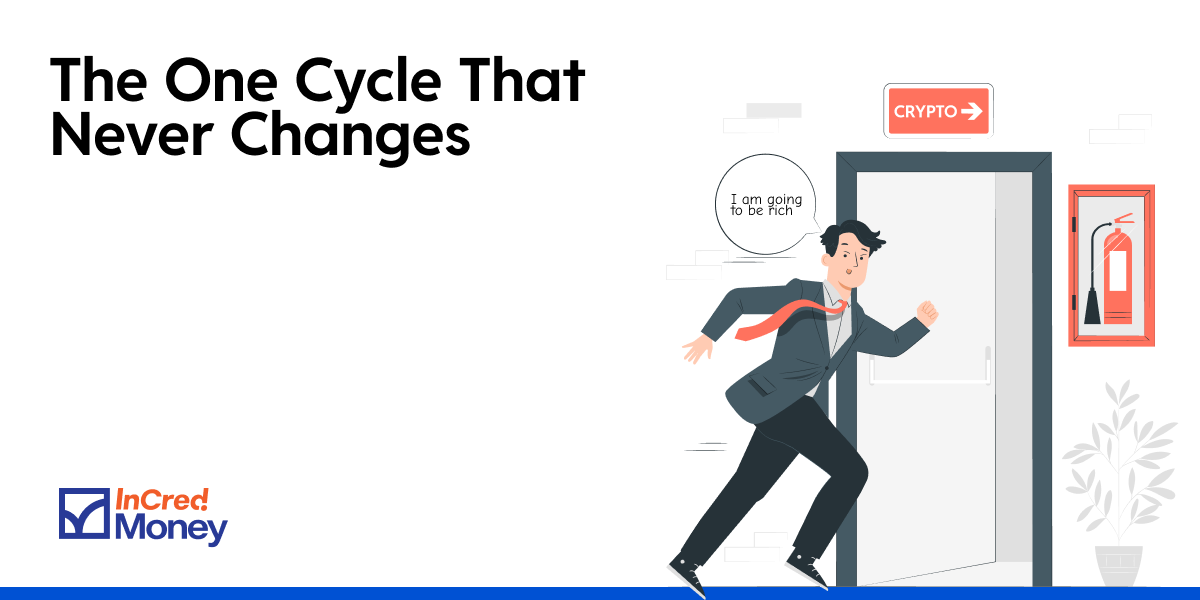
And yet, despite how sophisticated investors have become, one thing remains unchanged: we are hardwired to repeat the timeless cycle of Greed and Fear.
The Cycle of Greed and Fear
The legendary economist John Kenneth Galbraith wrote a brilliant book called A Short History of Financial Euphoria. In it, he argued that financial crises aren’t accidents; they are predictable events caused by a ‘notoriously short’ financial memory.
Galbraith identified a cycle that plays out the same way, whether it’s 17th-century tulips, the 2000s housing market, or the next ‘hot’ asset.
We’ve written about many of these bubbles before (you can read it here), and the storyline never really changes.
Here is how the trap is set:
1. The Displacement (The ‘New’ Thing)
Something new arrives, a new technology or financial instrument. It looks promising. It looks like the future.
2. Euphoria
Prices rise. The rising price itself becomes proof that the investment is good. We stop looking at the value of the asset and start looking at how much money our neighbour made on it last week.
3. The Specious Association
This is a fancy term for a dangerous mistake: We confuse wealth with intelligence. During a boom, we assume the people making the most money are geniuses.
As Galbraith wrote: ‘We seem to have a compulsion to associate unusual intelligence with the leadership of the great financial institutions.’
4. The Crash & The Aftermath
Eventually, the supply of new buyers runs out. Prices collapse, often violently. The ‘geniuses’ are revealed to be lucky or fraudulent, and anger replaces admiration.
5. Amnesia
This is the most dangerous part. Galbraith noted that financial memory lasts about 20 years, just enough time for a new generation to enter the market who believes ‘this time is different.’
The Hidden Fuel: Debt
What turns a normal price rise into a dangerous bubble? Leverage.
Galbraith famously noted that there is very little true innovation in finance. Usually, ‘innovation’ is just a fancy new way to borrow money (leverage) to buy assets.
When people borrow to speculate, the market becomes fragile. A small drop in price forces borrowers to sell to cover their debts, which drops prices further, triggering more selling. It is a downward spiral that moves much faster than the way up.
Why We Never Listen & Why We Forget
You might think: If this happens every time, why don’t we see it coming?
Galbraith argues that we don’t listen to warnings because we don’t want them to be true. During a boom, the illusion of effortless wealth is so seductive that anyone pointing out reality is treated with hostility. We view skeptics not as wise, but as people who ‘don’t get it.’
Furthermore, we are doomed to repeat these mistakes because, as per Galbraith, financial memory lasts only about 20 years. Once the generation that suffered through the last crash leaves the market, a new generation arrives. This new group, having never felt the pain of a collapse, convinces themselves that ‘this time is different’ and that the old rules of valuation no longer apply.
And so, inevitably, this cycle continues!
How to Survive the Cycle
The bad news is that the market will always cycle between extreme optimism and extreme pessimism. The good news is that you don’t have to participate in the madness.
Be Disciplined: Stick to a strategy like SIPs. This removes emotion from the equation, forcing you to buy more when prices are low and less when they are high.
Avoid the ‘Hot’ Thing: If an investment is making headlines and everyone at a dinner party is talking about it, the ‘Euphoria’ phase is likely already peaking.
Ignore the Noise: Remember Galbraith’s rule: ‘Financial genius is before the fall.’ Do not envy the speculators; their success is often temporary.
If history teaches us anything that we should practice in 2026, it should be this: our behaviour is the biggest market risk and the biggest opportunity. Cycles will keep swinging between fear and greed. What will matter is how we respond when each one feels most convincing.
If you enjoyed this yearbook, feel free to share it with your friends and family using the link below.
Also, if you have any topics that you would like us to cover or any other feedback, do write to us at connect@incredmoney.com
Till the next time,
Vijay
CEO – InCred Money