We like simple answers to complex questions and GDP is one such answer.
Over time, GDP has become more than just an economic indicator. It has turned into a symbol of success.
Becoming the world’s 4th largest economy and crossing the $4 trillion mark have been widely celebrated.
But are we sure we’re celebrating the right thing? Because GDP measures activity, not outcomes. It rises with spending, regardless of whether that spending improves lives or simply fixes problems we’d rather not have.
In doing so, it blurs the line between motion and real progress. And this isn’t an India-specific problem, it’s a limitation of the number itself, and how it’s calculated.
Let’s look at a couple of examples to understand why this number can’t be a barometer of our well-being.
Excludes Unpaid work
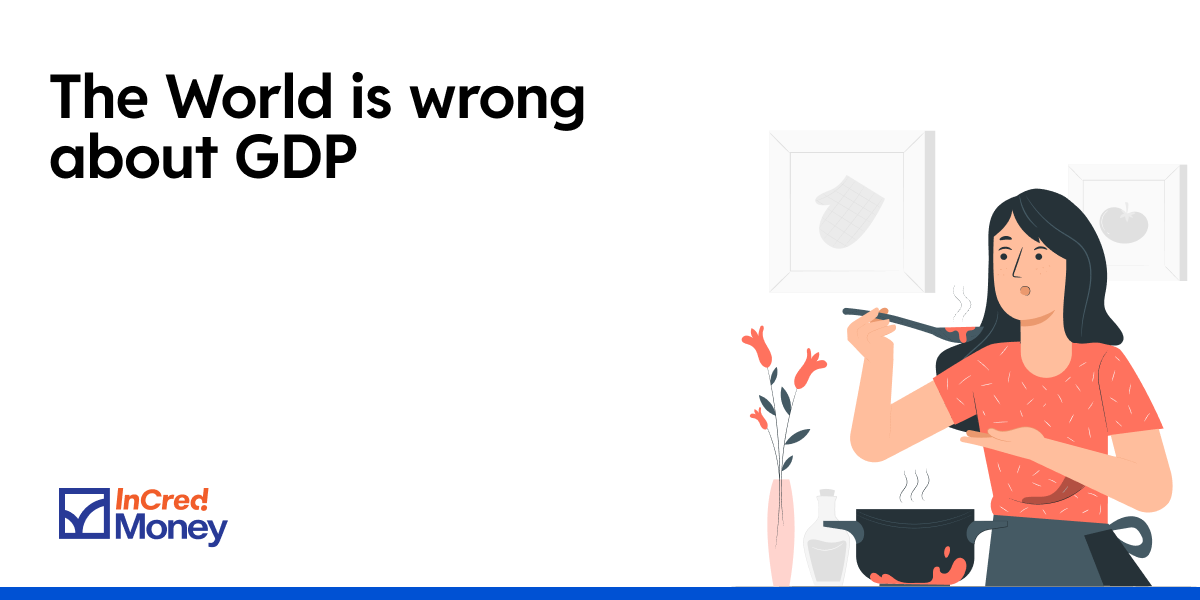
Growing up, I watched my mother run our household: managing us kids, caring for elders, cooking, cleaning. A full-time role. No weekends.
No leave. Yet, according to GDP, her contribution to the economy was… zero.
Ignores The Quality of Work
Mumbai is a good example.
A road gets built, GDP goes up. The monsoon arrives, potholes appear, repairs begin, and GDP goes up again.
On paper, economic activity keeps rising. But you’re still driving on poor roads. That’s how GDP can grow without life getting better.
To understand what GDP really captures, and what it completely misses, we broke it down at InCred Money with real examples, data, and stories in this video.
👉 Watch the full video here:
If this video resonated with you, or gave you a new way to think about what GDP really measures and what it leaves out, do share it with your friends and family and spark a conversation.
If you enjoyed this yearbook, feel free to share it with your friends and family using the link below.
Also, if you have any topics that you would like us to cover or any other feedback, do write to us at connect@incredmoney.com
Till the next time,
Vijay
CEO – InCred Money