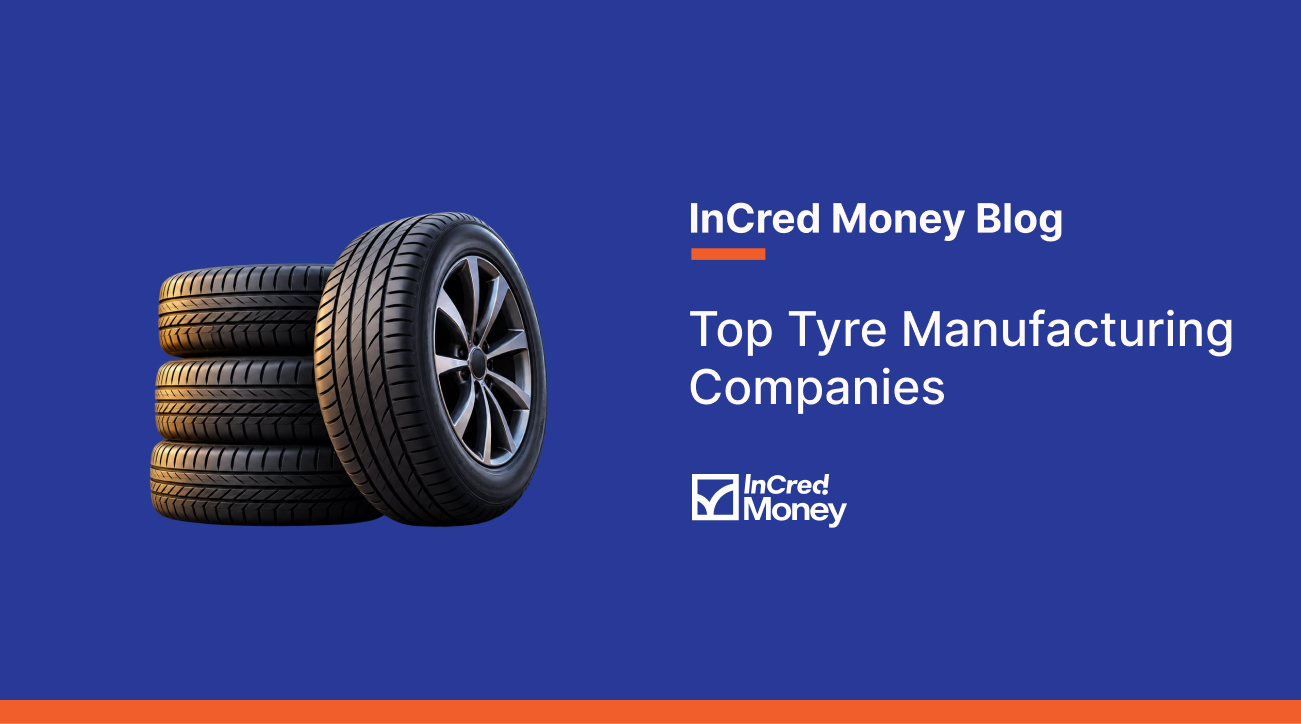
India’s tyre manufacturing industry supports passenger vehicles, two-wheelers, commercial vehicles and off-road equipment. Demand comes from new vehicle production, replacement purchases and exports. In Q2 FY27, MRF reported consolidated revenue from operations of ₹8,660.19 crore, while Apollo Tyres reported revenue of ₹7,968 crore. These results reflect the scale of leading tyre manufacturers, although their profitability remains sensitive to raw material costs and vehicle demand.
Top Tyre Manufacturing Companies in India
The following table covers five listed tyre companies:
| Company | NSE Symbol | Market Cap (₹ Cr) | Tyre Segment | Product Categories |
|---|---|---|---|---|
| MRF Ltd | MRF | 54,967 | Multi-segment | Car, two-wheeler, truck and bus tyres |
| Apollo Tyres Ltd | APOLLOTYRE | 26,719 | Multi-segment | Passenger, commercial vehicle and off-highway tyres |
| CEAT Ltd | CEATLTD | 14,127 | Multi-segment | Two-wheeler, car, truck and bus tyres |
| JK Tyre & Industries Ltd | JKTYRE | 10,613 | Multi-segment | Truck, bus, passenger car and two-wheeler tyres |
| Balkrishna Industries Ltd | BALKRISIND | 45,339 | Off-highway | Agricultural, mining, construction and industrial tyres |
Disclaimer: The above data is for informational and educational purposes only and should not be considered investment advice or a recommendation to buy or sell any securities. All figures and market data are as of 24 November 2026 and may change over time. Investors should conduct their own research and consult a qualified financial advisor before making investment decisions.
Overview of Top Tyre Manufacturing Stocks in India
The best tyre stocks in India represent different product categories and customer markets. These companies supply original equipment manufacturers (OEMs), replacement customers, and international markets.
MRF Ltd
MRF manufactures tyres for passenger vehicles, two-wheelers, trucks, buses, and off-road applications. Its products serve both OEM and replacement markets. MRF financials for Q2 FY27 show consolidated revenue from operations of ₹8,660.19 crore and net profit of ₹386.99 crore.
Apollo Tyres Ltd
Apollo Tyres manufactures passenger car, commercial vehicle, two-wheeler and off-highway tyres under brands including Apollo and Vredestein. Its business includes domestic and international operations. Apollo Tyres financials for Q2 FY27 reported consolidated revenue of ₹7,968 crore and net profit of ₹292 crore.
CEAT Ltd
CEAT produces tyres for two-wheelers, passenger cars, trucks, buses, and off-highway vehicles. Its products serve domestic and export markets. CEAT financials for Q2 FY27 reported consolidated revenue of ₹4,762 crore and net profit of ₹112 crore.
JK Tyre & Industries Ltd
JK Tyre manufactures truck and bus radial tyres, passenger car tyres and two-wheeler tyres. It supplies OEMs and replacement markets in India and overseas. JK Tyre financials include Q2 FY27 turnover of ₹4,850 crore, its highest quarterly turnover at the time of reporting.
Balkrishna Industries Ltd
Balkrishna Industries, known as BKT, focuses on off-highway tyres for agricultural, mining, construction and industrial applications. Balkrishna Industries financials for Q2 FY27 showed consolidated revenue from operations of ₹3,471.74 crore and net profit of ₹292.62 crore.
Tyre Industry Trends and Growth Drivers
The future of tyre sector India is linked to vehicle sales, replacement demand and export growth. Rising vehicle ownership and freight movement can support demand for replacement and commercial vehicle tyres. EV adoption is also encouraging manufacturers to develop tyres suited to vehicle weight, torque and noise requirements. Premiumisation, radialisation and expansion into international markets provide further opportunities. India’s tyre exports reached ₹27,312 crore in FY26, recording 9% growth over the previous year.
Key Risks to Consider Before Investing in Tyre Stocks
The risks of investing in tyre stocks include:
- Raw material prices: Natural rubber and crude-linked inputs can increase production costs.
- Competition: Price pressure can affect margins and market share.
- Demand cycles: Lower vehicle sales can reduce OEM orders.
- Export exposure: Currency movements, tariffs, and global demand can affect overseas sales.
- Operating costs: Higher energy, freight, and manufacturing expenses can reduce profitability.
How to Invest in Tyre Stocks in India
Investors exploring how to invest in tyre stocks can follow these steps:
- Open a Demat account: Open a Demat account and trading account on InCred Money.
- Use a trading app: Search for listed tyre companies and review their stock details.
- Compare business exposure: Assess OEM sales, replacement demand, product mix and market share.
- Review financials: Examine revenue growth, margins, debt, cash flows and manufacturing capacity.
- Compare valuations: Study valuation ratios and compare companies with similar business models.
- Place an order: Select the stock, enter the quantity, and choose a market or limit order.
These factors to consider before investing can help investors evaluate the financial position and business risks of tyre manufacturers.
MRF vs Apollo Tyres
MRF vs Apollo Tyres involves comparing two large tyre manufacturers with different product portfolios, market positions, and financial performance. MRF has a broad presence across vehicle categories, while Apollo Tyres has significant domestic and international operations. Investors can compare their revenue growth, profitability, debt, product mix and valuations rather than relying only on market capitalisation.
Conclusion
The tyre industry offers exposure to vehicle production, replacement demand, and exports. The top tyre companies in India operate across different vehicle and industrial segments, but their earnings remain sensitive to raw material prices and demand cycles. Investors should review company financials, operating performance and valuations before selecting tyre stocks in India.
Frequently Asked Questions
1. What is the impact of government policies on tyre stocks in India?
Import duties, quality standards, environmental rules, and automotive policies can affect production costs, competition, and demand.
2. Which tyre company in India has the largest market capitalisation?
Among the five companies listed above, MRF has the highest market capitalisation based on the cited November 2026 market data.
3. Can I invest in pre-IPO or unlisted tyre companies in India?
Yes, subject to availability and applicable regulations. Unlisted shares carry liquidity, valuation, and disclosure risks.
4. What is the minimum amount needed to start investing in tyre stocks?
There is no fixed minimum. The investment depends on the share price, quantity purchased, and transaction charges.
5. How long does it take for tyre stock orders to settle on NSE and BSE?
Most equity trades follow the T+1 settlement cycle, with settlement taking place one business day after the trade date.
6. Which Indian tyre company is the oldest?
MRF traces its origins to 1946, when it began as a small toy balloon manufacturing unit before entering the tyre business.
7. How can I track tyre stock performance over time?
Investors can follow share prices, quarterly results, market capitalisation, financial ratios, dividend announcements, and company filings on stock exchange websites.